Wednesday, December 1, 2010

Should "Don't Ask, Don't Tell" be repealed?

According to Wikipedia,"Don't Ask, Don't Tell" is the common term for the policy restricting the U.S. military from discovering or revealing closeted gay, lesbian, and bisexual service members, whiling also banning those who are openly gay, lesbian, or bisexual from military service. The act specifies that service members who disclose they are homosexual or engage in homosexual conduct shall be discharged except when a service member's conduct was "for the purpose of avoiding or terminating military service" or when it "would not be in the best interest of the armed forces." Also DADT specifies that superior officers should not initiate investigation about a member's orientation as part of the "don't ask" policy.

"Don't Ask, Don't Tell" SHOULD be repealed because it isn't fair to discriminate against gays and lesbians.

The policy tries to justify itself by stating that people who "demonstrate an intent to engage in homosexual acts" should be prohibited from serving in the armed forces of the United States because their presence "would create an unacceptable risk to the high standards of morale, good order and discipline, and unit cohesion that are the essence of military capability."

However, I believe it is not right that the act prohibits homosexuals from disclosing their sexual orientation or from speaking about any homosexual relationships while serving in the U.S. armed forces. Homosexuals should feel free to openly express their sexuality. They shouldn't have to live in fear that their homosexuality will be discovered.

The military should honor homosexuals' willingness to serve the United States. Just as the government shouldn't discriminate against race, gender, or religion, it also shouldn't discriminate against homosexuality. If someone is willing to serve his or her country with pride, honor, and dedication, he or she shouldn't be denied the right to be in the military.

Friday, November 5, 2010

Correlation between Unemployment and Election Results??


Why you think the democratic party lost so much? Are voters rational actors in times like this? What will change? What will not change?

Democrats lost control of the House in this 2010 mid-term election, however they still hold control of the Senate by a slim majority of 53 to 46 seats. Even though the Democrat's won the majority in the Senate, they still lost a net of 6 seats to the Republican party.

In the House, the Democrats lost a whopping 60 seats to the Republicans.

There isn't a correlation between employment figures and voting behavior. For instance, Democrats lost bids for re-election in Arkansas and Wisconsin. The current unemployment rate is 7.8% in Arkansas and 8.5% in Wisconsin. In both of these states, the unemployment rates went down within the year. Both of these states had a party change to Republican as well.

Democrats also lost seats held by retiring Democrats in North Dakota (3.8%), Pennsylvania (9%), and Indiana (10%), as well as a seat in Illinois (11.2%), which was once held by President Barrack Obama. The unemployment rate in all of these states went down except Illinois which went up 1% within the year. All of these states had a party change to Republican as well.

Democrats, however, are taking the lead in the races in Connecticut (9%) and Minnesota (7.2%).

Unemployment rates initially don't seem to have an effect on voting behavior because there are only small differences in numbers between those states that voted Democrat and those that voted Republican. However, one could argue that there has always been a direct correlation between unemployment rates and performance in midterm elections.

Either way, voters are probably not rational in times like these. People want jobs and will vote for the party that will supply them.


Friday, October 22, 2010

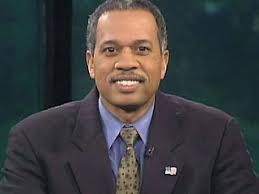
Should Juan Williams have been fired?


Talk of the Nation on NPR

Juan Williams was fired by NPR as a news analyst. He was fired for his comments on the O'Reilly Factor. Williams made a comment about him feeling uncomfortable on an airplane when someone is wearing traditional Muslim garb around him. He basically got a promotion because he accepted a job offer at FOX News.


Should Juan Williams have been fired?

Yes, because he violated his contract. Williams ruined his neutrality by saying that he felt uncomfortable around Muslims dressed in traditional clothing. Freedom of the press and speech have limits. Williams' comments were inappropriate , and he deserved to be fired. However, I think he deserves a second chance. Firing Williams might have been too extreme. I would have definitely had a talk with him to address his mistake. His comment was probably blown a little out of proportion. It comes down to his word choice and opinion. After watching the clip from the O'Reilly Factor, Williams definitely did not stay neutral, but instead clearly expressed his position, breaking his contract. As a liberal though, I don’t think Williams should now go work for FOX news. That career move doesn’t make sense to me.

Tuesday, October 12, 2010

"Why am I a __________?"


Why am I a Democrat?

My parents. Surprisingly, my parents are very liberal. My mom's side of the family is very conservative. It's actually quite funny to watch my grandparents argue with my parents over politics. I don't understand how my grandpa can be such a strong supporter of the Republican Party while my mom isn't. This question, "Why am I a _____?" is more complex than I thought.

Now that I am 18, I am eligible to vote. I have registered Democrat, but honestly, I have no idea what it means to be a Democrat. I feel so ignorant about political culture and ideology. It's like I just jumped on the party bus because that is what I am supposed to do. Isn't it?

To make any sense as to why I registered as Democrat, I had to look up what it means to be a Democrat. I found that liberals favor universal health care, decreased military spending, higher minimum wages, stem cell research, the legalization of same-sex marriage, abortion rights, stricter gun control, environmental protection laws, and cultural diversity. Although I disagree with a few of these things such as making abortion legal, I feel like I agree with the majority of them. Is this enough to classify me as Democrat? I really don't think so.

Anyways, I am hoping that by taking this course I will be able to uncover the reasoning behind my ideology. I am hoping to find a balance between community and individual based rights. In the end, I don't think my ideology will be classified as Democrat or Republican. Instead, I think it will be a happy compromise in-between.

Friday, October 1, 2010

The Education of "America's Precious Children"

Do you think the Race to the Top Fund is a good idea or is it the Federal Government overstepping its grounds? Explain.

The Race to the Top Fund is a good idea because it gives states' motivation to keep their educational systems up to an acceptable standard. This fund encourages states to promote good teachers and leadership in poor schools. The Race to the Top Fund also encourages states to raise the quality of their assessments. It also improves the educational agenda of the lowest-achieving schools.

The Race to the Top Fund is not overstepping the Federal government's grounds. Schools need to realize the importance of education in our country. If a school has a weak curriculum and instruction, then the rest of country is affected by that school's poor performance. The Race to the Top Fund is a nice incentive to create competitiveness among schools and encourage a stronger educational system in the United States.

In your opinion, should education be nationally or locally directed? Explain.

Education should be nationally directed. The United States, as a whole, should have an equal, as well as exemplary, standard of education. If education is locally directed, the level of education would vary from state to state. I think America is falling low on the list of the top most educated countries in the world because of the inconsistency in the educational system. Education on the national level will help the United States stay in the educational race with other countries. Whether people live in Maryland, Michigan, or Minnesota, they should still have the same level of performance. All of America needs to have the same quality of education, whether it is in public or private schools. If America doesn't focus on its education, it can forget about having any influence in the world.

Should we have a national Department of Education? Explain.

Yes, we should have a national Department of Education.

Unlike the systems of most other countries,education in the United States is diffused. Currently, the federal government and Department of Education are not heavily involved in determining curricula or educational standards (with the recent exception of the No Child Left Behind Act). This regulation has been left to state and local school districts.The quality of educational institutions is checked by a inspection known as accreditation, however this process hasn't been effective.

Rather, the primary function of the Department of Education is to formulate federal funding programs involving education and to enforce federal educational laws regarding privacy and civil rights.

Although the Department of Education enforces certain laws, I think it needs to establish and monitor educational standards in the states.

Address the weaknesses in the argument in the article you read.

In 1979, upgrading Education to cabinet level status was controversial and opposed by many in the Republican Party, who saw the department as an unconstitutional, unnecessary federal bureaucratic intrusion into local affairs. Similarly in this article, a conservative makes a weak argument about abolishing the Department of Education.


In the article, the author states that the Federal government is "brainwashing America's children." I think that this statement makes this lady sound very unprofessional and unconvincing. One of the main weaknesses in this article is that the author's argument completely lacks substance and support. The author states that the Department of Education is unconstitutional, but doesn't provide an effective grounds as to why. The author refers to Article I, Section 8 of the Constitution to attempt to prove her point. However, after reading Section 8, I found that it doesn't state anything the author mentioned.

The author believes that the Department of Education is educating America's precious children to be the "New Communist Man." This is way far-fetched. I don' think we have to worry about the Federal government preaching "social engineering and communitarian indoctrination."

The author also mentions that "public schools must return to educating children with the basics." I disagree. Education should not be average. Children should not be learning the basics but should be challenging themselves to learn more.


Tuesday, September 28, 2010

Federalism in the News

Read: http://www.cnsnews.com/news/article/75212

Should the federal government be able to force people to buy health insurance?

I don't think the federal government should be able to force people to buy health insurance. However, I do think that it is the government's responsibility to make sure that the citizens have options for health insurance. I believe that everyone should have health insurance, but I don't know that forcing it on Americans is the best system. Having the availability to health insurance is an important and basic right that every citizen should have. If people aren't willing to go and buy their own, the government should provide an option for them.

Read: http://reason.com/archives/2010/09/24/federalism-and-medical-marijua

Should the federal government tell states what drugs are illegal?

Initially I would have to say no-- the federal government should not tell states what drugs are illegal. However, when I really thought about this question, I changed my mind. If each state had the power to determine what drugs were illegal, there would be major issues regarding medications. For instance, let's say Florida declares marijuana illegal but California declares marijuana legal. If a doctor prescribes marijuana to a cancer patient in an unauthorized state, there might be legal problems and difficulties in obtaining the drug. This discrepancy could ultimately hurt the patient's health. The federal government should tell states what drugs are illegal just to make sure that medical prescription availability is universal. The last thing we want is a sick patient to be a criminal.